There were some English songs in New Horizon!!
We can approach pronunciation through music. There are obvious parallels between music and lauguage: both use rhythm and pitch changes to express meaning.
Music plays with sounds to produce pleasure, helps to overcome self-consciousnss, and can activate other abilities which can in turn consciousness, and can activate other abilities which can in turn help to activate liguistic capacity.
We need to choose music our students will respond to easily for a start, expanding our selection as we go, catering for all our students and opening up their sonic world and their minds.
Tuesday, June 05, 2007

Graduation Thesis ★ June
How much pronunciation work should we do?
Pronunciation should always be at the back of our mind. Be ready to steer our leanrers when necessary, and weave the activities into the fabric of our lessons. Many of the actvities will only take 5-10 minutes. It is important that we do not allow mistakes to become fossilized with beginners, but correcting too much and too overtly is counter-productive.
pronunciation is not something the teacher can instil in learners; it is something the learners assimilate for themselves. As a teacher we are the initiator, but respect our learners' choices and encourage them to have a personal agenda for development and to express their feelings. Develop their autonomy by suggesting they can and should work on their own, at home and in the wider world. Finally, welcome initiative and listen carefully to any ideas they may have about their progress.
Even if we have too little time to do pronunciation exercises using Sound Box, consider that most of the activities are short and can be integrated with other work in class. Most of them are simple and fun. We will probably find that 10 minutes spent on one of these at the begining of or during a lesson will not only result in a great improvement in our learners' pronunciation, but willalso have a positive effect on their attitude to the language and how they relate to the group.
Graduation Thesis ★ June 6
What makes learners believe they will not be able to pronunce English well?
People from some language backgrounds think it is unimaginable for people from their culture to pronunce English well, and this is often reinforced by prejudices and streotypes. Atually I had a streotype that Japanese cannot achieve good English pronunciation compared with Scandinavian and Dutch people. The differences that contrastive studies bring to light between the mother tongue and English will only reinforce this conviction , even in teachers. This can adversely affect divelopment of learners from these countries, even if they come acoss people who provide the contrary. Though there may be some apparently objective reasons for the learners' problems, they don't provide sufficient explanation for the lack of success. Near-similarity can be just as much a problem as great differences. In the end, the most important single factor is the leanrers themselves.
Another common belief, which is sometimes presented as an axiom of psychology, is that after certain age good ponunciatioon of a foreigh language can no longer be achieved. Even junior high school students they sometimes seem to give up to have good speaking skill and pronunciation of English since they started learning English from junior high school and only hope to be able to survive in English tests for entrance examinations. Whatever truth there may be in this, it is also true that many people who start learning a foreigh language after elementary school manage to achieve execellent pronunciation . The problems of those who appear to be incapable of doing so may simply be due to the self-consciousness that comes with ages and not to age itself.
Also junior high school students seems to feel rediculous producing `strange` sounds, or they may feel they look awful. This inhibits them; they avoid speaking and cannot develop a frame of mind that allows them to use their full potential. As the years go by they become convinced that for them `English is simply impossible to pronunce`.
So teachers neet to be up against, prejudice, myth, and belief that all efforts will be hopeless. All these - and there are can be as many different and compounded problems as there are learners - need to be tackled in order to help learners with pronunciation.
Reference:
Laroy, C. (1995). Pronunciation. Oxford English
Graduation Thesis ★ June 6
Why do we need to teach pronunciaiton?
Almost all English laguage teachers get students to study grammar and vocabulary, practise functional dialogues, take part in productive skills, and become competent in listening and reading. Yet some of the same teachers make little attempt teach pronunciation in any overt way and only give attention to it in passing. It is possible that they are nervous of dealing with sounds and intonation; perhaps they feel they have too much to do already and pronunciation teaching will only make things worse. They may claim that even without a formal pronunciation syllabbus, and without specific pronunciation teaching, many students seem to acquire serviceable ponunciatin in the course of their studies.
However, the fact that some students are able to acquire resonable pronunciation without overt pronunciation teaching should not blind us to the benefit of a focus on pronunciation in our lessons. Pronunciation teaching not only makes students awere of different sounds and sound features, but can also improve their speaking immeasurably. Concentrating on sounds, showing where where they are made in the mouth, making students aware of where wods should be stresses - all these things give them extra information about spoken English and help them achieve the goal of improved comprehension and intelligibility.
In some particular cases pronunciation help allows students get over serious intelligibility problems. I had taken English courses called English as a second language in the United States and the professor was able to help Cantonese, Korean, Japanese speakers of English achieve considerably greater intelligibility by working on our point of articulation. With other language groups it maybe a problem of the degree to whichspeakers do or do not open their mouths. Other language groups may have trouble with intonation o stress patterns in phrases and sentenses, and there are many individual sounds wchich cause diffeiculty for different first language speakers.
For all peaple, being made aware of pronunciation issues will be of immense benefit not only to their own production, but also to their own understanding of spoken English. Of course for Japanese junior high school English learners teaching pronunciation is very beneficial.
Referece:
Harmer, J. (2004). The Practice of English Language Teaching. Longman.
Tuesday, May 29, 2007
Graduation Thesis ☆ May 30
What results do I expect???
Teachers may not teach Sound Box.
I think some of the English teachers don't teach pronunciation using Sound Box. When I did student teaching I skipped teaching Sound Box as well since I didnt have enough time to teach it. Also, I felt teaching Sound Bow was a little bit difficult since I didnt have confident in my ability of pronunciation.
Students may hesitate to read the sentences like native speakers.
When I teach English at cram school, a lot of students hesitate to pronunce English like native speakers. I think some of them are too shy to speak English like English. I think they might do well for intonation, linking, and pause, but I think it might be hard for them to pronunce "r", "th", and "v" correctly.
Tuesday, May 15, 2007
Graduation Thesis ★ May 30
My methodology for the research.
I'm going to evaluate the pronunciation sections using my rubric.
Also I'm going to give a small reading text to students and see how they pronunce the sentences and how they mastered Sound Box.
[Reading Test]
I want to give a reading test to 10 9th grade students I teach English at the cram school from different junior high school.
1) Check Point
Segmental phoneme
Linking
Accent, Stress, Rhythm
Intonation
Pause
2) Examples of the reading test
A: Which do you like better, vegetables or meat ?
B: I like vegetables. How about you?
A: Me, too. I eat a lot of vegetables. Can you eat tomatos? I want to make a tomato cake to welcome you to our house.
B: That's great. Thank you.
Linking: about you [NH2SB3], lot of[NH2SB1], can you[NH2SB1]
accent, stress, rhythm: 質問内容に対する答えの強調 [NH2SB2],
Intonation: 疑問文の音調(A or B?) [NH1SB3], 疑問文の音調[NH1SB1]
Pause: コンマ前の区切り、不定詞の副詞用法の前での区切り[NH2SB4]
segmental phoneme: "v, th, r"の発音[NH2SB5], "tomato, cake"の発音
3) questionnaire
- When did you start learning English?
- Do you go to English Conversation school?
- Does your school English teacher teach Sound Box?
- Do you like learning English?
- Do you want to speak English like native speakers?
- How do you practice pronunciation at school?
- How do you practice pronunciation at home? ... etc
Wednesday, May 09, 2007
Graduation Thesis ★ May 9
My Rubric
1) Segmental phoneme
2) Linking
3) Accent, Stress, Rhythm
4) Intonation
5) Pause
I decided to use these rubrics to evaluate Sound Box. Because I read a couple books and every book mentioned almost the same areas of pronunciation.
Tuesday, May 08, 2007
Graduation Thesis ★ May 9, 2007
What are different areas of pronunciaton?
学習指導要領
・ 現代の標準的な発音(segmental phoneme)
・ 語と語の連結による音の変化(linking, Assimilation, Elision, weakening)
・ 語、句、文における基本的な強勢(accent, stress, rhythm)
・ 文における基本的なイントネーション(inotnation)
・ 文における基本的な区切り(pause)
渡辺和幸(1994). 英語のリズム・イントネーション指導. 大修館書店
・ 文の区切り方(pause)
・ 語、句の強勢(accent)
・ 文強勢とノーマル・ストレス(stress)
・ 強勢移動と音声変化(stress, linking)
・ リズムとイントネーション(rhythm, intonation)
畑中 考實・久松 豊(1997). 最新英語教育法. 成美堂
・ 個々の音の正確な発音に慣れること
・ 機能語の弱形に慣れる
・ 内容語の弱形節
・ 同化作用
・ 無声化と有声化
・ Stress, rhytm, intonation
Hewing, M.(2004) Pronunciation Practice Activities. Cambridge
Higher priority features of proninciation to teach
・ Consonants
・ Consonant clusters
・ Vowel length (ex. tins, teens)
・ Word Stress (ex. BABYsit, babySIT)
・ Tonic words (ex. A: Was it expensive? B: QUITE expensive.)
Lower Priority features of pronunciation teach
・ The exacy shape of vowels
・ Weak and strong forms
・ Using features of connected speech
・ Tones
・ The overall pitch of the voice
岡秀夫・赤池秀代・酒井志延(2004). A Manual for Improving the Teaching Ability of English Teachers. 大修館書店
・単音: 母音、子音、子音の連続
・音声変化: 連続(Linking)、同化(Assimilation)、脱落(elision)、弱化(weakening)
・プロソディー: 文強勢、リズム、イントネーション
Graduation Thesis ★ May 9, 2007
Linking リンキング
NH1SB5(p97): get up, did you, went to, at two
NH2SB1(p9): gave it, lot of, can you, get it
NH2SB3(p27): want to, use it, could you, read it, about you
NH3SB3(p25): don't you, could you, did you
Pause 区切り
NH2SB4(p45): 接続詞の前、副詞句後
NH3SB2(p17): 不定詞の副詞的用法前、従属節(コンマ)後、接続詞の前
Graduation Thesis ★ May 9, 2007
New Horizon 1 's Sound Box
SB1(p31): 疑問文の音調(be動詞&一般動詞の疑問文)
SB2(p55): 疑問文の音調(疑問詞で始まる疑問文)
SB3(p71): 疑問文の音調 (A or B?)
SB4(p89): 文における強勢 リズム
SB5(p97): リンキング
※その他、New Horizon1でのみ、基本練習の項目で●印で強勢を表している。
New Horizon 2's Sound Box
SB1(p9): リンキング
SB2(p17): 文における強勢
SB3(p27): リンキング
SB4(p45): 文の区切り
SB5(p55): Tongue Twister/ f&v, s&-, t&-
SB6(p63): 母音の発音???
SB7(p81): 音調???
New Horizon3's Sound Box
SB1(p9): 文における強勢 リズム
SB2(p17): 文の区切り
SB3(p25): リンキング
SB4(p45): 台詞文後の音調
SB5(p55): 聞き返す際の音調
SB6(p63): thatの発音???
What I found out...
- In 7th grade New Horizon they don't use IPA. They only use IPA in the end of the book.
- They don't teach how to pronunce "r" and "l".
- They changed how to teach rhythm from "ター" to "●".
- I thought they should teach the difference between denizen and English. (ex. ボタン vs. button)
Sunday, May 06, 2007
Graduation Thesis ★ May 6
1) My central question
"Which areas of pronunciation does the New Horizon Sound Box cover and what implications does this have for students' pronunciation development?"
2) Summary of the article I found this week
I found a really useful article called "発音教育をめぐる教育環境 -入門期の発音指導の現状" by 山本久仁子.
She investigated how the English textbooks (New Horizon, Total English, and One World English Course) of 7th grade deal with pronunciation and analyzed with 5 areas of pronunciation(Segmental Phoneme, Accent, Intonation, Pause, and Linking). She found that every textbook teaches the phoneme of each words well, but she figured that the teaching of suprasegmental phoneme is not enough for the English to communicate with foreign people. Each textbook have different approaches to teach intonation and stress, and especially New Horizon is making a new attack on the teaching the pronunciation.
3) How does this article relate to my thesis?
I want to investigate only about New Horizon becasue it is one of the most widely used textbook in Japan(it has a circulation of 2,000,000 in 1998). Also I want to analyze not only 7th grade but also 8th&9th grade textbooks to know how it teaches different areas of pronunciation in each grades. I still don't know how many areas of pronunciation I am going to use to analyze but I am sure the way she analyzed the textbooks will help my analysis.
Monday, April 23, 2007
Graduation Paper ☆ April23, 2007
How can we improve students' English pronunciation?
How can we motivate students to improve their pronunciation?
What kind of activities are effective to improve students' pronunciation?
Monday, February 12, 2007


Graduation Paper ★ Feb 12, 2007
For my graduation research paper I have decided it would be interesting to write on the topic of ALT. More specifically, I would like to research the following:
-Can ALTs motivate students to study English?
-Do students like to talk with an ALT?
-Do students have opportunities to talk with an ALT inEnglish?
-How long does each student talk with an ALT in English on average?
-Do students have chances to talk with an ALT outside of the class?
-Can the communication with an ALT give studentsmotivation for studying English?
-Do students have chances to know about other cultures from ALTs?
With the results, I hope that I can suggest how we can devise classes effectively with an ALT, and how we can let students interact in intercultural communication with an ALT. Because I have not yet narrowed my interests and I am unsure whether my topic is appropriate, I have not been able to decide on a title. I appreciate your advice on whether or not my topic is appropriate for this paper. Please leave me any comments!!!
Sunday, October 08, 2006
NCC volume9---September


North Central College Fall term 2006 started from September 11, and now I am in third week so it is getting busier and busier with lots of homework. I am taking three classes this term; Interpersonal Communication, Chinese, and Human Geography.
First, Interpersonal Communication, this class combines lecture, discussion, reading, exercises, group activities, exams, and a term project: record an actual conversation and analyze using specific communication concepts and theories. Even though it is third week, I am sure this class helped me to advance my communication competence by developing increased sensitivity in interpreting and participating in interpersonal interaction.
Second, Chinese, there are two reasons I thought I want to start studying Chinese. One is because here in the United States many people can speak more than two languages so I felt like I want to study more languages to communicate the people from different countries. The other reason is because last year I met an exchange student from Taiwan and we became really good friends, so I became really interested in Taiwan and Chinese culture. This is still a 100 level class so we learn simple sentences and how to ask questions, but I want to keep studying in Iwate as well.
Third, Human Geography, this class exposes me to a new and exciting way of viewing the world which we live in and help me to better prepare for the world stage. Last week we joined the activity called “invisible children”: Some college students from San Diego made this organization for the children who are sacrificed for the dispute in Sudan. We watched the movie they made and listened to the story about their experiences. Actually I was really surprised that college students started this organization and they are really helping the children by selling DVDs, giving them the opportunities to work in Sudan, and giving educational opportunities. I did not even know where Sudan is. I am really ashamed of my ignorance about the world. I am sure this class will help me to understand the world more.
I continue to be a member of International Club, Japan Club, Focus, and Voice of Praise (Gospel Choir) this fall term. However, this year is a little bit different, because I became an officer of International Club. So this year I plan the activities with other officers for the new exchange, international, and North Central College students considering educational aspects for better understanding of the cultures of other countries. This fall term we are planning to go to the state of Wisconsin for the retreat, have a Halloween Party, and have Buddy System and English Table for new international students. It is really fun to give my ideas and discuss for the better decisions and run this big club with reliable other officers. I am really proud of being a publicity officer of this club with amazing friends.
NCC volume8---August


My study abroad program is from January 3 to November 23. As you know to go to American college from January is very unusual. I chose this period just because I really wanted to go study abroad as soon as possible after my teaching practice. However, I think it was very good choice for me to come to North Central College from winter term. There are a couple reasons.
First, the main reason is that I can spend summer in the United States. During the school term, it is hard to spend time with friends, do extra activities, and go to Chicago or other places because we are always busy for the classes. However, during summer vacation I could do lot of things I could not do during school term. Of course, the weather is very good for traveling and outside is very beautiful with many flowers and green. It is the best time to stay around Chicago.
Second, I can spend more time in the United States. Usually other exchange students from Japan stay at North Central College for 9 months. However, in my case I can stay here almost 11 months, which is very good for me because I can spend as much time as possible in the United States
Third, I could work hard to catch up to other exchange students. When I first met other exchange students, they could speak English much better than me, so I worked hard to catch up with them. Also, they gave me lots of advice from their experiences of fall term, which helped me a lot.
However, of course, there are a lot of disadvantages to coming to North Central from winter. Here are some examples.
First, I came here on January 2 right before the day school starts so I did not have time to do orientations. Other exchange students told me that they had an orientation week before school starts and they did campus tour, library orientation, etc. It was very hard for me not to have an orientation week.
Second, I have to move my dorm twice, which is very hard. Usually exchange students live in the same dorm called Kimmel but my first dorm was different from other students, which was very good to have American friends but sometimes it was very hard. Also, I had to move to another dorm for summer and I have to move to next dorm for fall term. So I had to look for new roommate by myself. In North Central College, students can choose their next dorms and rooms, but to get better room we need a lot of credits. Fortunately, one of my friend suggested to stay with her next year so I could find my roommate, but it was hard for us to get good room because I had only 9 credit which is less than freshman. I will go back to Japan after fall term so my future roommate will have new roommate randomly from winter term so I feel sorry about this.
Third, it was hard to register classes. In North Central College, students register their classes in May for their next whole year. So when I registered my classes, some classes were already closed. Fortunately, I could get in the classes I wanted to take but I was always on waitlist and it made me so nervous.
For me the advantages of summer outweigh the disadvantages, but it depends on our goal of study abroad program and our schedule of college. I hope my opinion can help future exchange students from Iwate.
Tuesday, July 18, 2006
NCC volume7---July Photos
 1. Indiana Soldier & Sailer's Monument
2. Cubs Game --- we lost.... super sad
3. Relay for life --- i walked all night
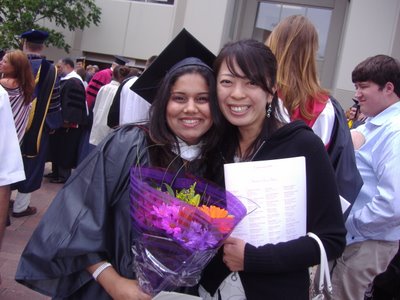
4. NCC graduation --- i wanna wear gown!!!
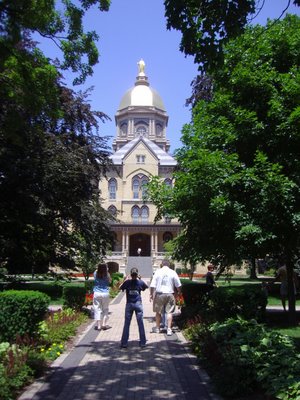
5. Universitry of Notre Dame(in IN) --- the building was gold☆


NCC volume6---June

North Central College
Volume 6 --- July
Our summer vacation is from the beginning of the June to the beginning of the September. Almost all of the students went back to their houses right after the finals for part time jobs, so only a few students who are taking summer classes are here at North Central. At first, I was thinking about working on campus, but I did not get a job, because I thought I should do lots of things that I can do only in the United States during the summer. Basically, I did four things from the beginning of summer until now.
First, I went to Chicago to look around the city and went to famous places: Navy Pier, Lincoln Park, Six Flags, The Art Institute of Chicago, Museum of Science and Industry, Cubs games, The University of Chicago, etc. During school terms I hardly could go to Chicago because I had lots of homework to do, so even if I live close to Chicago I did not know about Chicago well. Especially during summer there are lots of events or festivals in the city so I could enjoy walking around and know about Chicago.
Second, I went on a trip to the states of Wisconsin, Indiana, and Michigan to visit my friends and stay with them. I used Amtrak and bus to get there and stayed in their homes with their families. It was a great opportunity to see other states and try different food or see famous places. Especially in Indiana I met Amish people and tried their food and saw their houses; it was a great experience.
Third, I babysat a couple of times for people who were introduced to me by my host mother and my friends. Once, before the kid went to bed she asked me to read a book. So I read the book for her and she said, “Your English is different,” and she read the book for me. It was my best memory. I did not have lots of opportunities to spend time with little kids before especially foreign kids, so it was very good time.
Forth, I joined Camp Tawanchi, which is a camp for elementary school students, and I taught about Japan to 30 students for 2 hours. I told the basic information of Japan, taught how to use chopsticks and make paper cranes, and made some Japanese foods. They asked me lots of questions about Japan and they became interested in Japan so I think it worked very well.
At first I was really worried about the summer because I was the only exchange student who stayed here during summer and the International Office closed. I did not know what I could do and I thought I would be bored. However, through the help of my friends I have really enjoyed my summer. Now I am in Indiana. I will visit Canada soon with my friend by car. She is a Japanese major and she is really interested in going to Iwate. I wrote that many Japanese major students prefer to go to Tokyo or Kyoto and they are not interested in Iwate. But she said to me, “I want to see real Japan not like a big city like Tokyo or Osaka”. I was very happy to hear that. After I come back to Iwate, I hope I can do something for the students who come from North Central as they did for me and I hope many students are interested in Iwate.
Sunday, June 25, 2006


Monday, May 22, 2006
NCC volume5---May
North Central College
Volume 5 --- May
1 World Relief
Every year more than 7,000 refugees come to the United States to escape from war, torture and persecution. They have no food, money, job, or friends, they may not be able to speak English; they have absolutely nothing. As you can imagine, this is a huge burden on the refugees.
The World Relief center located in Aurora, it works work with churches, individuals, and community groups in providing a range of services to the refugees and immigrants living in Dupage or Kane County. According to the website, World Relief provides the refugees with many services such as self sufficiency aid in their transition from their country to the U.S., a child and youth project helping the family and children cope with their new life, a human service liaison, meaning helping them attain access to public benefits, counseling, adequate education in order to learn how to be more self efficient, citizenship and immigrant services, transitional housing, and helping the families build a relationship with volunteers and churches. Each service helps these immigrants and refugees in adjusting to their new life.
I am working with the refugee K-3 kids after school from 3:15 P.M to 5:15 P.M at Davis Church located in Aurora every Monday. Basically I am helping with their homework, singing English songs, and playing word games to help their development of English.
Helping the refugees not only makes me a better person, but I also get the chance to be there and see how the children live their life. It gives me an idea of what they went through to be here today with us in the United States. I hope that in the near future more volunteers take time to help the refugee kids and their family as well for the better life here. A little help can make a difference in the refugee’s life. In Japan we do not have opportunities to know about these problems well, so I hope I can inform my friends. Definitely, I will continue this volunteer work until I go back to Japan.
2 First Exchange student from North Central
Hey! All of members of the English department!! Rejoice at the GOOD news!!! The first exchange student from North Central College is coming to our University!!!! (Yeeeeeh☆)
Name: Amy Butcher
Sex: Female
Age: 21
Grade: Junior
Major: Japanese
Minor: East Asian Study
Interests: Viola, Gospel, IWATE
Favorite movies:Serenity, LOTR, Donnie Darko, Love Actually, Harry Potter, The Dark Crystal, Ladyhawke, UHF, Rocky Horror Picture Show, Moulin Rouge, Watership Down
Favorite books:Dune, LOTR, The Dark is Rising Sequence, Ender's Game, Harry Potter, The Things They Carried, The Once and Future King
☆★Short Questionnaire★☆
Q1. How long are you studying Japanese?
I am studying Japanese 2 years.
Q2. Why were you interested in Japan?
I like challenging hard things. Japanese is totally different from English so I wanted to try. Also I am interested in Japanese culture.
Q3. What do you want to do in Iwate?
I want to see 石割桜.
I want to try わんこそば.
I want to make many friends in Iwate.
I want to try various kinds of fish. I love Sushi!
Q4. Do you have any concerns?
I want to make many friends in Iwate University, but I cannot speak Japanese well. So I am worrying about whether I can make friends or not. Also I want to do some kind of job, like teaching English to little kids or something like that.
☆★Message from Amy★☆
はじめまして。私はブッチャー・エミーです。三年生です。せんこうは日本語と東アジア学です。私のしゅみはビオラをひくことと、歌をうたうことです。私はドッググルーマーです。5年やっています。早く日本に行きたいです。楽しみです。友達をたくさんつくるぞー。やったー。
This is a GREAT opportunity for us to practice English with a native English speaker, make an American friend, and share Japanese culture to foreigner. I am so excited to meet her in Iwate University. She is a Great and Sweet girl and she wishes to make many friends in Iwate! I want her to make many Japanese friends and enjoy feeling cultural differences as I am doing here.
Subscribe to:
Posts (Atom)